Supersonic jet that can fly from LA to NY in under 3 hours could soon launch as travel restriction lifted
A new era of air travel may be on the horizon after US aviation regulators took an important step toward bringing supersonic passenger flights back to American skies. If the plans move forward, travelers could one day fly between Los Angeles and New York in less than three hours—roughly half the duration of today's typical journey.
A Historic Policy Change
For more than five decades, supersonic flights over land have been prohibited in the United States. The restriction was introduced in 1973 after concerns that loud sonic booms could disturb communities and damage property.
Instead of maintaining the long-standing prohibition, the Federal Aviation Administration (FAA) is now shifting its approach by developing aircraft noise standards. The goal is to allow faster-than-sound travel while ensuring noise levels remain acceptable for people living beneath flight paths.
Why the Ban Is Being Reconsidered
Modern aviation technology has advanced significantly since the original regulations were introduced. Improvements in aircraft design, engineering, and noise-reduction technology have enabled reductions in the impact traditionally associated with supersonic travel.
FAA Administrator Bryan Bedford has stated that these technological developments could make it feasible to eliminate the decades-old restriction while minimizing noise for communities near airports and along flight routes.
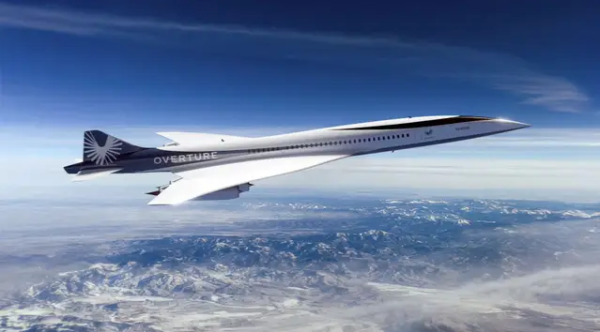
Photo: (Boom Supersonic)
What This Means for Travelers
If commercial supersonic services become available, domestic travel across the United States could be transformed. A route such as Los Angeles to New York, which currently takes around 6 hours on a conventional flight, could be completed in approximately 3 hours.
Supersonic aircraft travel faster than Mach 1—the speed of sound—which is more than 770 mph (1,240 km/h). By comparison, most modern commercial airliners cruise at speeds between 550 and 600 mph (885–965 km/h).
New Regulations Still in Progress
Although the FAA has announced its intention to replace the old ban with updated noise regulations, the process is still underway. Separate standards covering takeoff and landing noise are expected to be proposed later this year, while the final regulations are not anticipated before the middle of 2027.
Companies Leading the Return of Supersonic Travel
Several aerospace companies are already preparing for the return of commercial supersonic aviation.
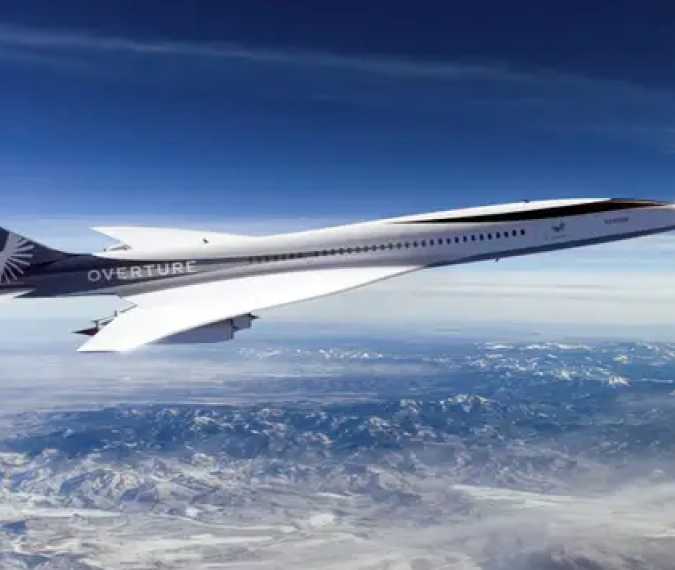
Boom Supersonic, based in Colorado, is developing passenger aircraft designed to carry 60 to 80 passengers. The company has announced orders from major airlines, including United Airlines, American Airlines, and Japan Airlines.
Meanwhile, Atlanta-based Spike Aerospace is focusing on the luxury market by developing a high-speed private jet aimed at business executives and premium travelers.
Government Support for Faster Air Travel
The FAA's latest move follows an executive order signed by President Donald Trump in June 2025, which argued that the long-standing ban on overland supersonic flights had reduced America's competitiveness in the aerospace sector.
The order highlighted that advances in engineering, materials, and noise-reduction technology have made supersonic aviation safer, more sustainable, and increasingly viable for commercial operations.
Looking Ahead
The renewed interest in supersonic travel marks a significant change from the concerns that dominated the 1960s and early 1970s. During that period, sonic boom experiments—including the well-known Oklahoma City tests—generated widespread public complaints after causing broken windows and structural damage, ultimately leading to the nationwide ban.
While commercial supersonic flights are not expected to return immediately, the FAA's new direction represents a major milestone. If the upcoming regulations are approved and new aircraft perform as expected, travelers could soon experience a dramatic reduction in cross-country flight times, ushering in one of the biggest changes in aviation since the retirement of Concorde.